Members: Bansalan, Bea Francheska Morgiah | Bolotaulo, Allianah Junnice| Buenavista, John Kyle | Bulandres, Simon Gabriel | Bulanon, Kylie Shane | Bustamante, Nick Kirvy | Cadelina, Cecilia Ina Mae | Caducoy, Flabie Swithered | Cadungog, Chrissel Kate | Cadungog, John William
At HIVE Clinical Laboratories, we are not just a healthcare facility; we are your partners in precision diagnostics, dedicated to providing a comprehensive array of advanced and specialized services. Nestled at the forefront of cutting-edge technology and medical expertise, HIVE is your trusted destination for accurate, timely, and personalized clinical testing.
A Spectrum of Services Tailored to Your Needs
Explore the vast spectrum of our services, ranging from Hematology, Clinical Chemistry, and Microbiology to Molecular Diagnostics, Histopathology, and Blood Banking, and more. Each service is meticulously crafted to unveil the nuances of your health, ensuring a thorough and accurate assessment.
Where Science Meets Compassion: Your Health, Our Priority
At HIVE, we understand the importance of timely and reliable results. Our commitment to delivering the highest standards of accuracy and efficiency is matched only by our dedication to providing compassionate care. Your well-being is our priority, and we strive to make every step of your diagnostic journey seamless and supportive.
Our main and common services include:
- Hematology: Complete Blood Count (CBC)
- Definition: A CBC is a blood test that provides information about the quantity and types of cells in the blood, including red blood cells, white blood cells, and platelets.
- What it Measures/Analyzes: It measures parameters such as red blood cell count, white blood cell count, hemoglobin concentration, hematocrit, platelet count, and differential white blood cell count.
- Principle Behind the Test: Various blood components are measured using automated analyzers, which count and characterize different blood cells based on their size, density, and staining properties.
- How it is Done: A blood sample is collected and analyzed using automated hematology analyzers.
- Equipment Used: Hematology analyzers.
- Clinical Chemistry: Comprehensive Metabolic Panel (CMP)
- Definition: The CMP is a blood test that provides information about the status of a person’s metabolism, including kidney and liver function, electrolyte balance, and blood glucose levels.
- What it Measures/Analyzes: It includes tests such as glucose, electrolytes (sodium, potassium, etc.), kidney function tests (blood urea nitrogen and creatinine), liver function tests (alanine transaminase, aspartate transaminase, etc.).
- Principle Behind the Test: Enzymatic reactions and chemical reactions are used to measure concentrations of various substances in the blood.
- How it is Done: A blood sample is collected and analyzed using automated clinical chemistry analyzers.
- Equipment Used: Clinical chemistry analyzers.
- Microbiology: Culture and Sensitivity Testing
- Definition: A microbiological test that involves growing microorganisms from a clinical specimen (such as blood, urine, or sputum) and determining their susceptibility to antibiotics.
- What it Measures/Analyzes: It identifies the types of microorganisms present in a sample and determines which antibiotics are effective against them.
- Principle Behind the Test: Microorganisms are cultured on specific media, and their growth is observed. Sensitivity testing involves exposing the microorganisms to different antibiotics to determine their response.
- How it is Done: Clinical specimens are collected and inoculated onto appropriate culture media. The subsequent growth is observed and analyzed.
- Equipment Used: Incubators, culture media, microbiological plates.
- Molecular Diagnostics: Polymerase Chain Reaction (PCR) Testing
- Definition: PCR is a molecular technique used to amplify and analyze DNA, allowing the detection of specific genetic sequences.
- What it Measures/Analyzes: It identifies and amplifies specific DNA sequences, aiding in the diagnosis of infectious diseases, genetic disorders, and paternity testing.
- Principle Behind the Test: DNA is replicated in vitro using specific primers and a DNA polymerase enzyme.
- How it is Done: DNA is extracted from a sample, mixed with primers and enzymes, and subjected to temperature cycles to amplify the targeted DNA sequences.
- Equipment Used: PCR machine, DNA extraction kits, primers.
- Histopathology and Cytology: Fine Needle Aspiration (FNA) Biopsy
- Definition: FNA is a diagnostic procedure in which a thin, hollow needle is used to obtain a small tissue sample from a lump or mass for microscopic examination.
- What it Measures/Analyzes: It helps diagnose tumors, infections, and other abnormalities by examining the cellular structure of the obtained tissue.
- Principle Behind the Test: A thin needle is inserted into the target tissue, and cells are aspirated for examination under a microscope.
- How it is Done: The procedure is typically performed using a syringe and a fine needle, guided by imaging techniques such as ultrasound or CT scan.
- Equipment Used: Fine needle, syringe, imaging equipment (ultrasound or CT scan).
- Blood Banking (Transfusion Medicine): Crossmatching
- Definition: Crossmatching is a blood test that ensures compatibility between donated blood and the recipient’s blood before a blood transfusion.
- What it Measures/Analyzes: It determines whether the donor’s blood is compatible with the recipient’s blood to prevent transfusion reactions.
- Principle Behind the Test: Donor red blood cells are mixed with recipient serum, and vice versa, to check for potential reactions indicating incompatibility.
- How it is Done: Blood samples from the donor and recipient are mixed and observed for agglutination or other reactions.
- Equipment Used: Blood typing reagents, microscope.
- Clinical Immunohematology: Rhesus (Rh) Typing
- Definition: Rh typing is a blood test that determines the presence or absence of the Rh factor (Rhesus factor) on the surface of red blood cells.
- What it Measures/Analyzes: It classifies blood as Rh-positive or Rh-negative, which is crucial for blood transfusions and pregnancy-related issues.
- Principle Behind the Test: Specific antibodies are used to detect the presence or absence of the Rh factor on red blood cells.
- How it is Done: Blood samples are mixed with Rh-specific antibodies, and the reaction is observed.
- Equipment Used: Blood typing reagents, microscope.
- Radiology and Imaging Services: X-rays
- Definition: X-rays are a form of electromagnetic radiation used in medical imaging to visualize the internal structures of the body.
- What it Measures/Analyzes: It captures images of bones and soft tissues to diagnose fractures, infections, tumors, and other conditions.
- Principle Behind the Test: X-rays pass through the body, and their absorption by different tissues creates an image on a detector.
- How it is Done: The patient is exposed to X-rays, and the resulting images are captured on X-ray film or a digital detector.
Equipment Used: X-ray machine, X-ray film or digital detector.
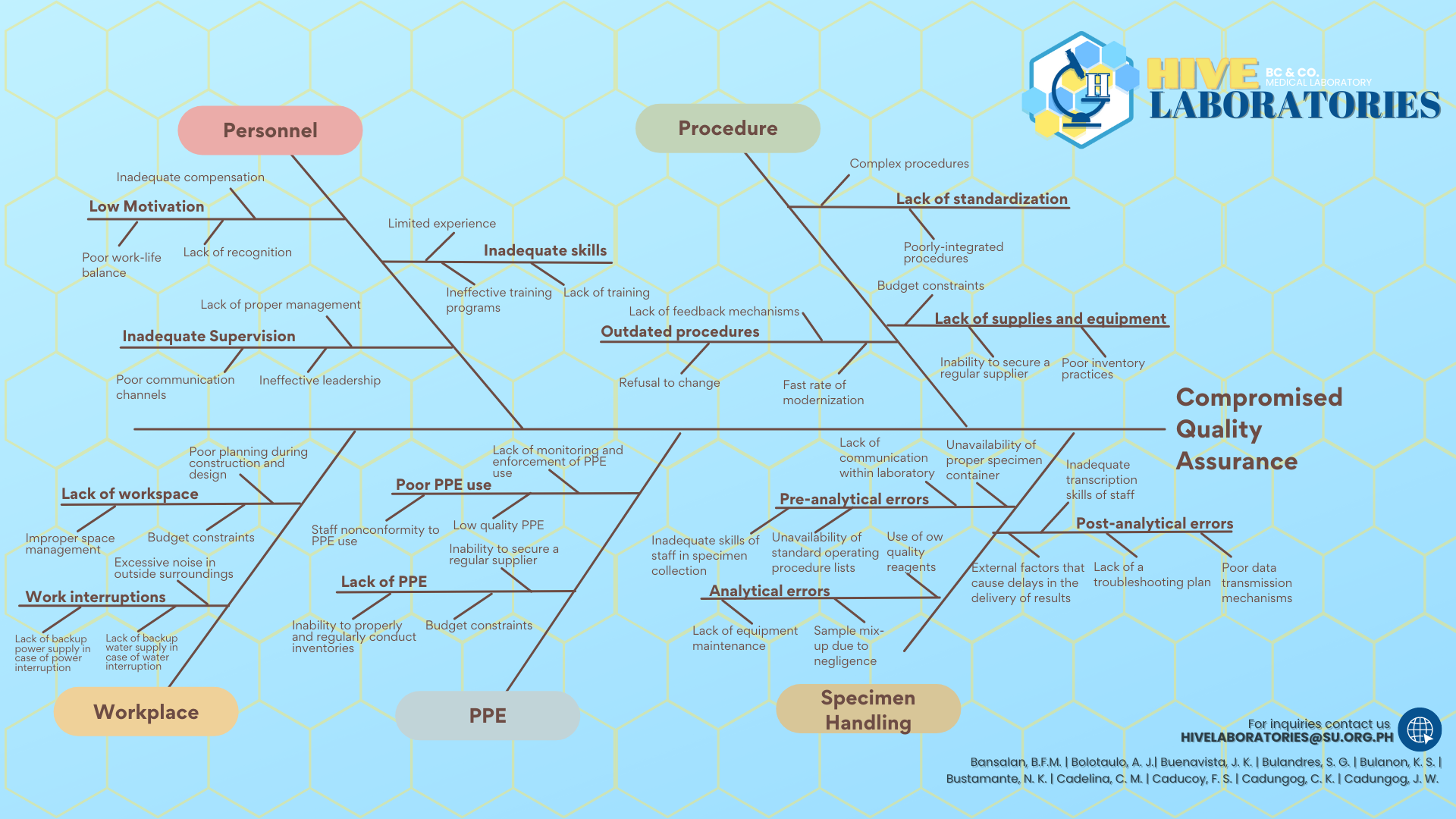
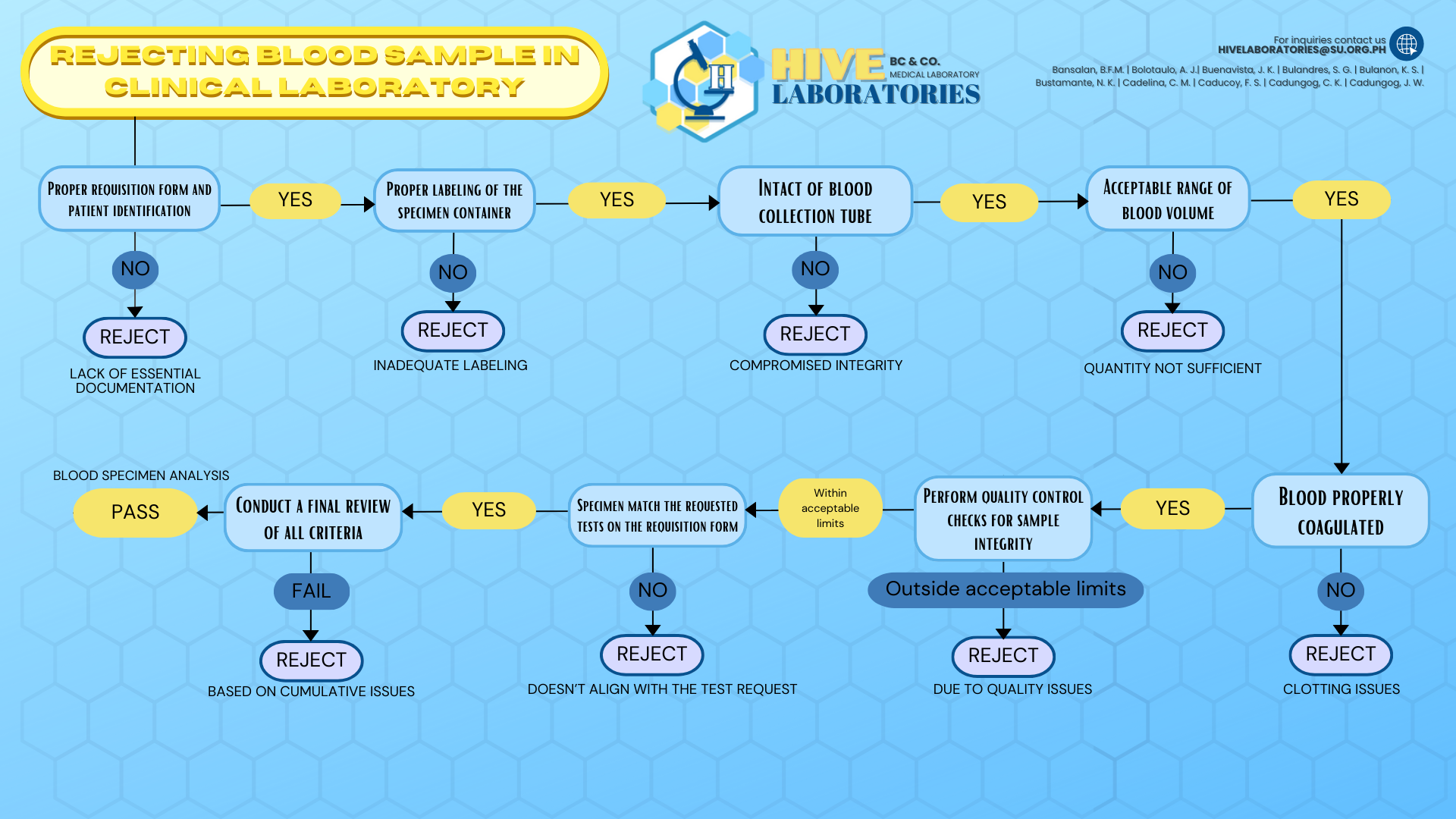
Note: Download the attached files for Decision Map and Fishbone Diagram. Please contact johnwilliamecadungog@su.edu.ph for concerns.






Wow, so nice. I should visit there someday, someone’s gonna love me, the way, I wanted you to need me
Someday, someone’s gonna take your place
One day, I’ll forget about you
You’ll see, I won’t even miss you
Someday, someday