-

Ricci Libron posted an update in the group
 Histology Art (MT 30 – J) 4 years, 5 months ago
 The integumentary system is the largest organ system in the body. It forms a physical barrier between the external environment and the internal environment. It also regulates the temperature, synthesizes Vitamin D, and detects the stimuli. It is composed of the Skin, the hypodermis, the hair, and the nails.
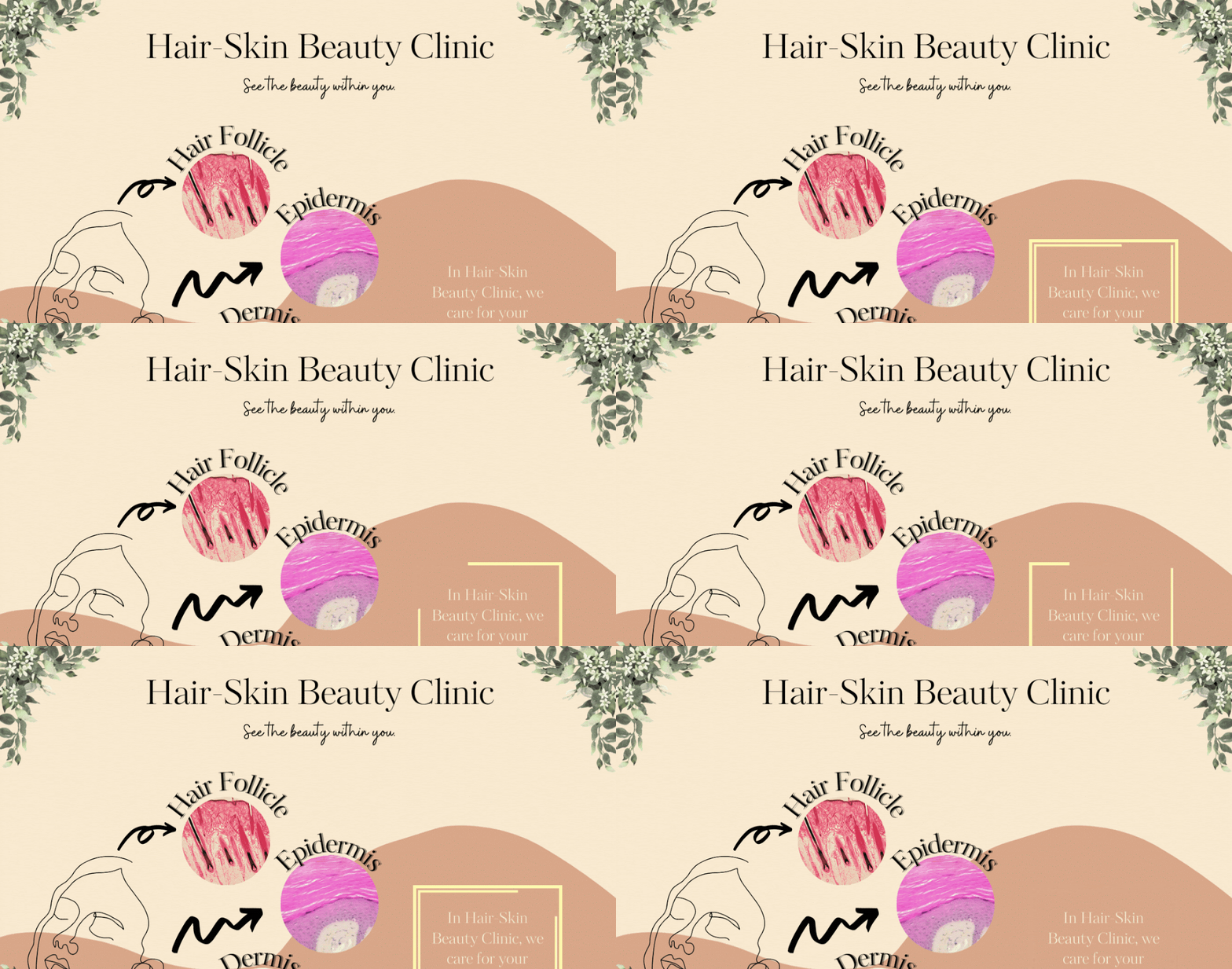
The Skin consists of Epidermis and Dermis. The Epidermis acts as the first line of defense against the environment. This tough outer layer comprises Stratified Squamous Epithelial Cells divided into stratum corneum, stratum granulosum, stratum spinosum, stratum basale, and stratum lucidum (only present in the palms and soles, located between stratum corneum and stratum granulosum). It regenerates from stem cells found in the basal layer that grows towards the corneum.
The Dermis is an underlying tissue framework that supports the Epidermis. It has two parts: superficial papillary DermisDermis and the deep reticular layer. The former forms finger-like projections into the Epidermis, known as dermal papillae, and has a highly-vascular loose connective tissue. The latter has a dense connective tissue that forms a strong network.
The hair follicle contains the hair bulb that actively divides to extend the hair shaft vertically.
Sources: Kim JY, Dao H. Physiology, Integument. [Updated 2021 May 9]. In: StatPearls [Internet]. Treasure Island (FL): StatPearls Publishing; 2022 Jan-. Available from: https://www.ncbi.nlm.nih.gov/books/NBK554386/
Integumentary System.gif – Google DriveIntegumentary System.gif – Google Drive
Recently Active Members






